
AFO (Ayak-Bilek Ortezi) Modülü
Bacak ve ayak taramasından AFO tasarlayan masaüstü yazılım hazır ve pilot kliniklerde doğrulanıyor. AFO doğrudan 3B yazıcıda basılabilir ya da termoform atölyesi için frezede işlenecek pozitif model çıkarılabilir. Yaygın 3B tarayıcıların dosyası açılır; tarama hizalanır, kenarlar ve kayış yuvaları eklenir, klinisyen onayından sonra üretim dosyası hazırlanır.
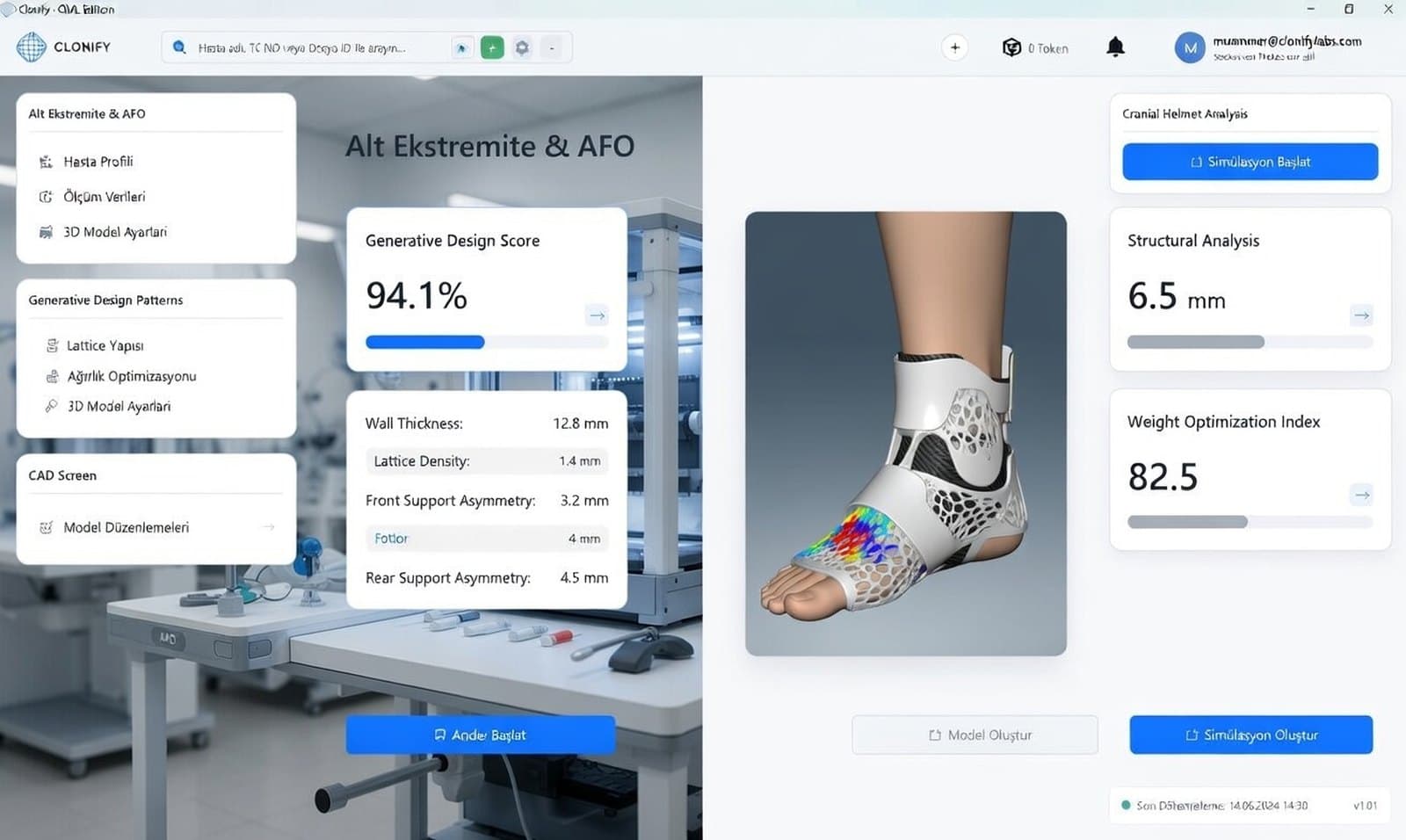
Temel Özellikler
- Yaygın 3B tarayıcılardan bacak ve ayak taraması
- Nötr pozisyon hizalama ve kırpma
- Bölgesel kabuk kalınlığı ve kenar hattı
- Kayış yuvası ve kesim hattı düzenleme
- Doğrudan 3B baskı ya da termoform için frezede işlenecek pozitif model
- Klinisyen onayı sonrası üretim dosyası dışa aktarma
- Aynı taramadan revizyon, önceki sürümler kayıtlı kalır
Hizalama
Kabuk kalınlığı
Kayış yuvası
Hangi klinik problemi hedefliyor
AFO üretiminde en çok emek gerektiren adımlar alçı seansı, pozitif modelin elle düzeltilmesi ve kesim hattının törpüyle açılmasıdır. Ayağın nötr pozisyonda tutulması kritik olduğu için ölçü seansı çoğu zaman iki kişilik bir iştir; spastisitesi olan hastalarda tekrar gerekebilir. Oturmayan bir ortezin düzeltilmesi de aynı zinciri baştan çalıştırmak anlamına gelir.
Bu modül alçı zincirinin yerine taramayla çalışan bir akış kurmayı hedefliyor: aynı taramadan tekrar tekrar tasarım üretilebilmesi, revizyonun yeni bir ölçü seansı gerektirmemesi ve kesim hattının törpü yerine ekranda belirlenmesi. Yazılım ve iş akışı hazır; saha doğrulaması pilot kliniklerle sürüyor.
Planlanan iş akışı
Kurgulanan akış dört adım: bacak ve ayak taraması içe aktarılır, ayak nötr pozisyona göre hizalanır ve gereksiz bölgeler kırpılır. Ardından yüzeyden bir kabuk türetilir; kabuk kalınlığı bölgesel olarak ayarlanabilir, çünkü bilek bölgesi her adımda esnerken topuk bölgesi rijit kalmalıdır.
Üçüncü adımda kenar hattı yumuşatılır ve kayış yuvaları açılır. Dördüncü adımda klinisyen kesim hattını, kabuk kalınlığını ve rijitlik dağılımını onaylar. Onaydan sonra dosya dışa aktarılır.
Üretmesi hedeflenen ölçüm ve çıktılar
Çıktı tarafında Clonify iki üretim yolunu birden destekler: doğrudan 3B yazıcıda basılacak AFO dosyası ve termoform atölyeleri için frezede işlenecek pozitif model. Klinik ister AFO'yu doğrudan bassın, ister vakumlu termoformu sürdürüp alçı model yerine frezelenmiş modeli kullansın, tasarım aynı akıştan çıkar.
Ölçüm tarafında taramadan türetilen ayak uzunluğu, bilek çevresi ve baldır çevresi gibi değerler dosyaya kaydedilir; böylece revizyonlar öncekiyle karşılaştırılabilir olur.
AFO: taramadan üretime
Ekrandaki bacak örnek bir taramadır. Adımlar, yazılımda 3B baskıyla üretilecek bir AFO'nun tasarım adımlarıyla aynıdır.
- 1Tarama
- 2Hizala
- 3Kabuk
- 4Üretim
Modeli döndürmek için sürükleyin · Aşamalar sayfayı kaydırdıkça ilerler
01 · Tarama
Taramanın yüklenmesi
Alt bacak taraması yüklenir. Burada 3B baskı yolu gösteriliyor; termoform için frezede işlenecek pozitif model ayrı bir akışta hazırlanır.
- Modül
- AFO
- Adım
- Tarama yükleme
Gerçek örnek tarama: afo_limb_orig.ply — kimlik bilgisi içermez
1. Tarama — Taramanın yüklenmesi
Alt bacak taraması yüklenir. Burada 3B baskı yolu gösteriliyor; termoform için frezede işlenecek pozitif model ayrı bir akışta hazırlanır.
2. Hizala — Hizalama ve ayak yönü
Bacak doğru duruşa getirilir; ayağın ve parmakların baktığı yön tarama üzerinde ayarlanır.
3. Kabuk — Kabuk, kenarlar ve kayışlar
Kabuk, tarama yüzeyinin biraz dışında oluşturulup kalınlaştırılır; kenarlar dışa kıvrılır, kayış yuvaları ve delikler açılır.
4. Üretim — Hacim kontrolü ve üretim dosyası
Hacim kontrol edildikten sonra model üretim dosyası ya da rapor olarak alınır.
AFO
AFO (3B baskı ya da termoform modeli)
AFO için iki üretim yolu var: doğrudan 3B baskıya hazır kabuk ya da termoform için frezede işlenecek pozitif model.
- 1
Taramayı Yükle
Tarayıcınızdan aldığınız bacak ve ayak taramasını yüklersiniz.
- 2
Hizalama
Tarama, bacağın referans eksenlerine göre hizalanır.
- 3
Ayak ve Parmak Yönü
Ayağın ve parmakların duruş yönünü tarama üzerinde ayarlarsınız.
- 4
Parmak Kutusu
Ortezin parmakları saran ön bölümü eklenir.
- 5
Kırpma
Ortezde yer almayacak bölümleri taramadan çıkarırsınız.
- 6
Şekillendirme
Yüzeyi istediğiniz bölgede kabartır ya da oyarsınız.
- 7
Kalınlık Verme
Yüzeye et kalınlığı verilir ve ortez katı bir parçaya dönüşür.
- 8
Kenarı Dışa Açma
Kenarları dışa doğru kıvırıp yumuşatırsınız.
- 9
Kayış Yuvası
Kayışların geçeceği yuvalar açılır.
- 10
Delikler
Havalandırma ve bağlantı için delik açarsınız.
- 11
Hacim ve Kalınlık
Ortezin hacmini ve et kalınlığını kontrol edersiniz.
- 12
Dosya ve Rapor
Biten model, üretim dosyası ya da rapor olarak alınır.
Bu modülle ilgili ücretsiz ölçüm araçları
Diğer ortez ve protez tasarım modülleri
Taramadan üretime tüm iş akışı: medikal 3D CAD yazılımı rehberi
AFO modülünü ekibinizle deneyin
Demoyu kendi vakalarınızdan biri üzerinde yapalım.