
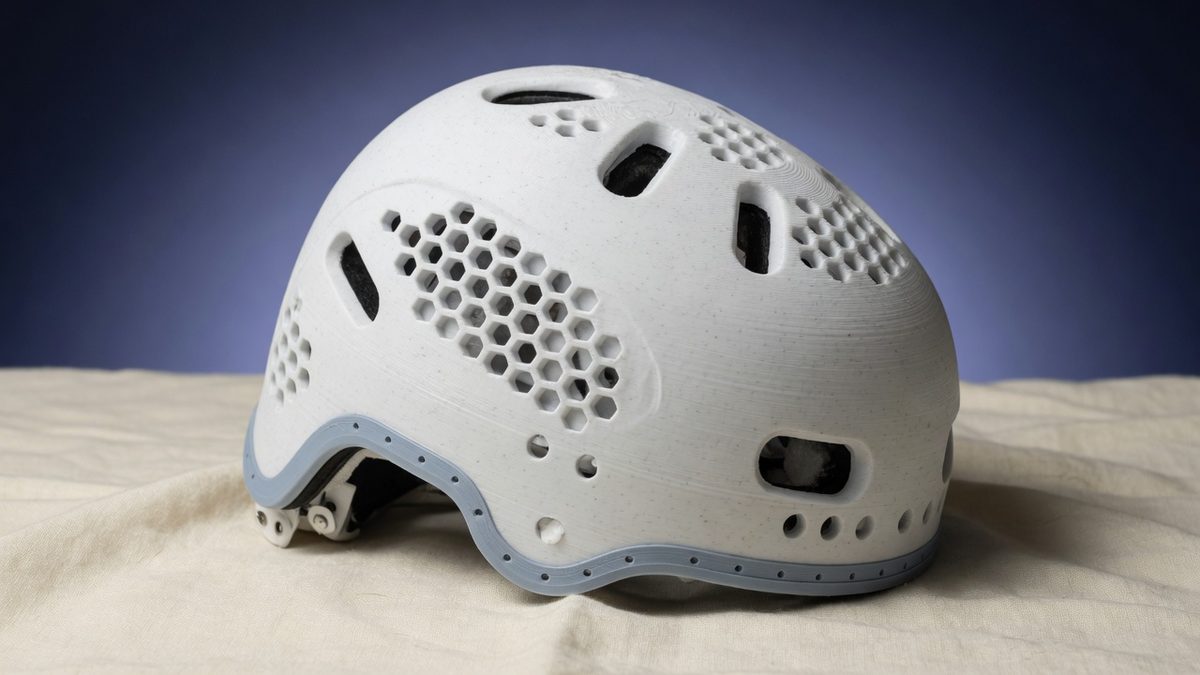
In a positional plagiocephaly clinic, the most debated question isn't whether helmets work but when they are needed. Parents ask 'should we wait a bit longer?', paediatricians want to give repositioning a chance, and the orthotic clinic sees the window narrowing in late referrals.
Three studies published in the past year add data to that debate. One is large and single-centre, one compares two treatment routes, and one is a small series on 3D-printed helmets. None gives a definitive answer on its own, but they point in the same direction.
455 infants: late starts and ear shift
Himmelstoß and colleagues (Cleft Palate-Craniofacial Journal, 2026) reviewed records of 455 infants treated with a helmet between 2011 and 2021 at the maxillofacial surgery outpatient clinic of a German tertiary centre. Plagiocephaly was the most common deformity, in 332 infants. Measurements were taken manually.
Three factors predicted an unfavourable outcome: ear shift (Exp(B) = 0.199), a large initial diagonal difference (Exp(B) = 0.518) and a delayed start. Later starts were associated with a smaller reduction in diagonal difference (rs = −0.229). A higher baseline cranial (cephalic) index, on the other hand, increased the probability of success.
The authors' conclusion is clear: early diagnosis and intervention are crucial, especially with ear shift or severe initial deformity. It is a retrospective, single-centre design, so who started treatment when was not random.
Helmet or conservative management?
Vogt and colleagues (Clinical and Experimental Pediatrics, 2025) took 72 of 199 infants followed between 2015 and 2024 who had at least 90 days of treatment and a severity of at least level 2 on the CHOA scale: 36 had a helmet, 36 had conservative management. Every infant's head was measured with a 3D surface scanner.
Monthly CVAI correction was almost identical: 0.66 points with a helmet and 0.64 with conservative management. Severity improved in 24 of 36 infants (67%) in the helmet group and 15 of 36 (42%) in the conservative group; the difference sat at the edge of statistical significance (P = 0.058). Treatment lasted a median of 21.9 weeks in the helmet group and 20.6 weeks in the conservative group. The share of infants who reached the mildest level (level 1) was 25% with a helmet and 11% with conservative management; this difference was not significant either (P = 0.220).
One detail matters here: the helmet group started at a mean of 31.9 weeks, the conservative group at 21.0 weeks. Because helmets are often prescribed when repositioning hasn't been enough, the groups weren't equal at baseline. Even so, the helmet group corrected at the same speed. In both groups, an earlier start was the strongest predictor of improvement; in the helmet group the correlation was r = −0.480.
3D-printed helmets: a small but tidy series
Atallah and colleagues (Frontiers in Pediatrics, 2025) reviewed records of 11 infants treated with 3D-printed helmets at a single centre in Jordan. Mean CVAI fell from 7.7 ± 2.8% before treatment to 3.1 ± 1.0% after. Treatment lasted a mean of 9.7 weeks, the helmets weighed 180–220 grams and were worn about 23 hours a day. No adverse events were reported in the records.
In this series, age at start was not associated with outcome. The authors themselves say this is most likely due to the small sample. Eleven infants can't support 'age doesn't matter'. The study's real contribution is showing that helmets designed from a 3D scan and produced on a 3D printer can achieve correction similar to conventional moulded helmets.
Practical implications for the clinic
First, don't delay the first measurement. Giving repositioning a chance is reasonable, but every week that passes without a recorded baseline weakens later comparison. An early measurement doesn't force a helmet decision; it grounds the decision in numbers.
Second, re-measure with the same method. Comparing a caliper reading with a value computed from a 3D scan may show the difference between methods rather than the change. Follow-up sessions should use the same method and the same reference planes.
Third, look at ear position. In the German study ear shift was one of the strongest predictors of an unfavourable outcome. A top-down photo or a single circumference won't capture it; a 3D scan records the whole head geometry, so ear position can be reviewed later as well.
Fourth, think in corrected age for preterm infants. A case that looks late by calendar age may still be early by corrected age.
What this article doesn't say
All three studies are retrospective. None sets a threshold for who should get a helmet, and neither does this article. The treatment decision belongs to the physician and orthotist who examine the infant. All we argue for is that the decision rests on an early, repeatable measurement.
Frequently asked questions
When should cranial helmet therapy start?
Published studies don't give a single age cut-off, but they point the same way: in a 2026 German study of 455 infants, later starts were associated with less correction, and in a 2025 study of 72 infants an early start was the strongest predictor of improvement in both helmet and conservative groups. The decision is made by the physician and orthotist who examine the infant.
How long does plagiocephaly helmet therapy take?
It varies between studies. In an 11-infant series of 3D-printed helmets in Jordan, treatment lasted a mean of 9.7 weeks with the helmet worn about 23 hours a day. In a 72-infant comparison from 2025, the median in the helmet group was 21.9 weeks. Duration depends on age at start, severity and consistent wear.
Can plagiocephaly improve without a helmet?
Asymmetry can also decrease with conservative management: in a 2025 comparison, monthly CVAI correction was similar in both groups. However, 25% of the helmet group and 11% of the conservative group reached the mildest level (the difference was not significant), and the authors suggest helmets may help more in severe cases. The physician who examines the infant decides which route fits.
Is helmet therapy more effective than conservative management?
In a 2025 comparison, monthly CVAI correction was similar with both approaches (0.66 and 0.64). Severity improved in 67% of the helmet group and 42% of the conservative group, but the difference was at the edge of statistical significance. The helmet group started later; the authors suggest helmets may help more in severe cases.
Do 3D-printed cranial helmets work?
In a 2025 series of 11 infants in Jordan, mean CVAI fell from 7.7% to 3.1% with 3D-printed helmets and no adverse events were reported. The sample is small and retrospective, so larger studies are needed.
What most affects the outcome of helmet therapy?
In the 2026 study of 455 infants, ear shift, a large initial diagonal difference and a late start predicted an unfavourable outcome, while a higher baseline cranial index increased the probability of success.
See Clonify with your own cases
Start with a free 30-minute demo.